Global mobility (GM) involves balancing the interests of various stakeholders. These often include business leaders focused on budgets, alongside HR, legal and tax teams responsible for ensuring moves remain compliant. But at the centre of any international move is the employee.
A positive employee experience is vital not only to the success of an individual assignment, but it can also shape perceptions of mobility programmes more broadly. In this context, getting support right while weighing up other key priorities is an important strategic task for GM teams.
What is the employee experience in GM?
The entire lifecycle of an international move is punctuated by challenges for the employee and their family. From preparation before the move and the actual relocation abroad, to adapting to, living and working in a new country, to then planning the next steps in life and career post-assignment, each stage is sensitive to different pressure points. The employee experience is an end-to-end journey through this process.
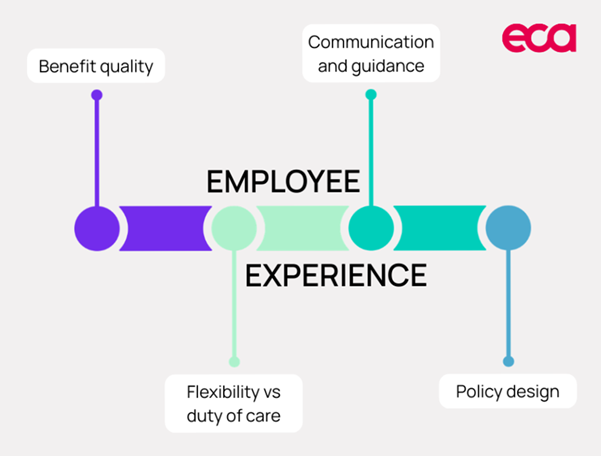
Several factors within the control of GM teams shape this experience. Policy design plays a central role, determining the level and type of support employees receive. Clear communication and guidance can also have a big impact, helping employees understand what assistance is available and what steps they need to take. The quality of relocation services, destination support and ongoing benefits further influence how well employees settle into and thrive in their new environment. Balancing flexibility and duty-of-care in the type of support offered and how it is arranged can make a difference too.
Why does the employee experience matter?
This can all be tough for GM teams to consider, monitor and maintain, but the consequences usually make it worthwhile.
Employees who relocate smoothly and settle quickly are often better positioned to focus on their role and deliver value for the business. Positive experiences also tend to mean greater willingness to accept future international opportunities, which is increasingly important as organisations compete for globally mobile talent. At the same time, the experiences shared by assignees can shape how mobility programmes are perceived internally, influencing both employee engagement and buy-in from organisational leadership.
Negative experiences can be just as impactful. ECA’s latest Managing Mobility Survey found that early assignment terminations are most commonly caused by employee performance issues and their inability to adapt. Meanwhile, concerns around how the family is likely to experience an international move often prevent moves from going ahead in the first place.
Is the employee experience being recognised?
Cost pressures and compliance issues have typically dominated thinking for GM teams when measuring the overall aims of mobility programmes. In a climate of rising assignment costs, greater budgetary scrutiny and increased regulatory exposure, these concerns are certainly not going away.
Yet early data from our currently active Global Mobility Now survey shows that three-quarters of organisations give significant importance to the employee experience when assessing their mobility goals. Clearly organisations are recognising the value of properly supporting mobile employees throughout their time abroad, as they look to strike the right balance between different major priorities.
While these priorities may seem contradictory, filling support gaps doesn’t have to involve large increases in spending. By reviewing provision and refining policies so that support can be allocated where it has the greatest impact on each individual move, organisations can help ensure they deliver the best possible employee experience and stay on track to meet their strategic objectives.
Benchmark your employee experience
Discover how other GM teams rate their employee experience, the support they provide and the outcomes it influences with our Global Mobility Now Survey.
Now extended until 18 March, this quick-to-complete, high-level survey also explores the latest trends in mobility demographics, AI and technology adoption and cross-border compliance.
Take part now to make sure your mobility programme keeps pace in a changing landscape.