World Health Day is a timely reminder that access to quality healthcare is far from consistent around the world. For those working across borders, this can mean exposure to different healthcare systems, languages and standards of care to what’s expected back home.
For global mobility (GM) teams, this makes medical support a core feature of their duty of care towards mobile employees and their families. Prompt access to trusted medical advice and treatment can significantly reduce risk, prevent minor issues from escalating and ensure employees feel supported wherever they are.
The impact of effective support is crucial. Safeguarding employee wellbeing prevents disruption that can destabilise international assignments. This helps ensure moves remain on track for success, for both the employee and the organisation, and is an important part of enabling organisations to operate confidently across borders.
The reality of medical support for mobile employees
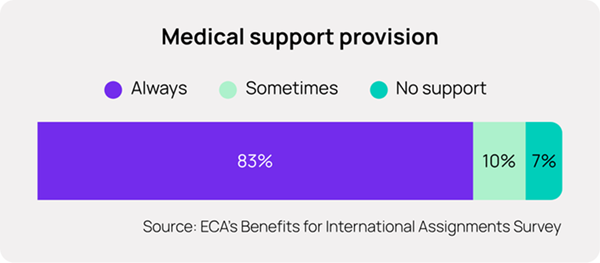
In this context, it is reassuring that our latest Benefits for International Assignments Survey shows that only 7% of organisations do not offer private medical insurance for international assignees, with most also extending support to accompanying family members. Support is typically delivered directly to the provider, which removes the burden from the employee of sourcing and funding healthcare services, ensuring ease and speed of access to quality care when required.
Support does have its limits though. Two-thirds of organisations impose a ceiling on the costs they will cover for certain services, often outpatient or dental care. And where insurance policies require an excess payment for some or all costs, responsibility for payment usually falls to the employee.
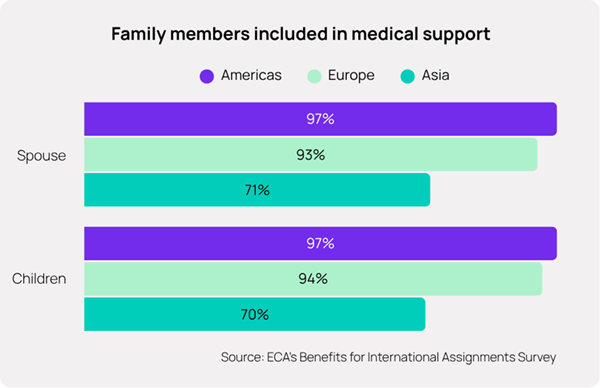
There are clear regional differences in medical support too. Although a majority of organisations based in Asia ensure the employee’s family are covered by the medical insurance policy, the proportion is significantly lower than for the rest of the world Coverage offered by Asian companies also tends to be less in-depth – maternity care and mental health services are only covered by one-third of Asian organisations, compared to roughly three-quarters of those in Europe. While this may reflect prevailing local norms, it underlines the importance of ensuring mobile employees retain a suitable level of medical support, wherever in the world they are working.
Access the full findings
The Benefits for International Assignments Survey contains detailed information on medical insurance for long-term assignments, as well as other commonly offered benefits such as accommodation, transport, education and more.
Participants can access the report and full survey results using the link emailed at the time of publication.
Didn’t take part? Get in touch to discuss your options to access the data you need.